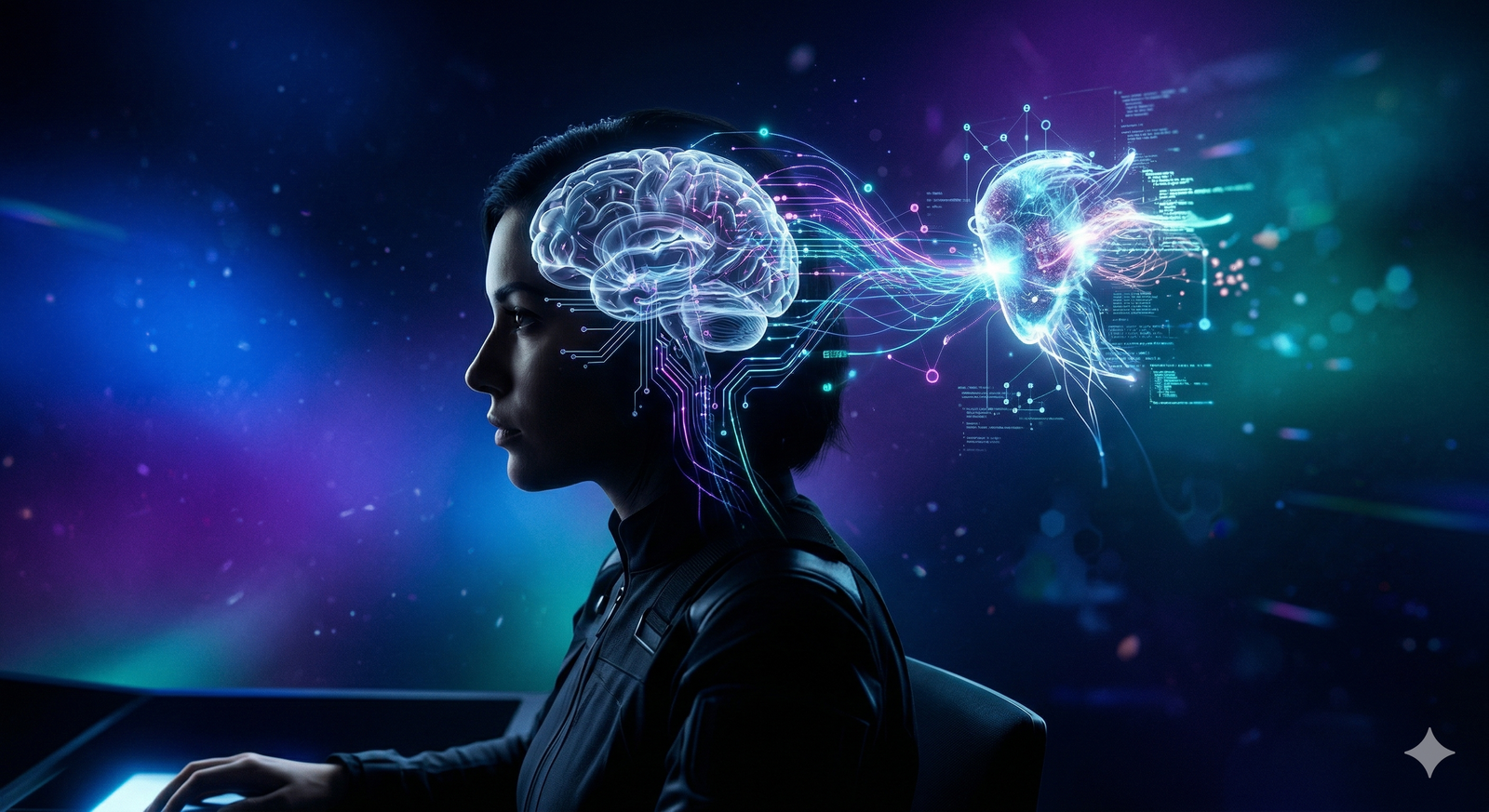
The notion of creativity has long been held as an exclusively human domain, a mystical spark of genius that defies algorithmic logic. Yet, as Artificial Intelligence rapidly evolves, its role is shifting from mere automation to active augmentation, presenting an unprecedented opportunity to redefine and amplify human creative potential. This isn't about AI replacing the artist; it's about AI becoming the ultimate co-pilot, an endlessly patient and powerful partner ready to propel your creative projects into new dimensions. For the modern professional, understanding and strategically leveraging AI is no longer optional—it's the key to unlocking a truly superhuman level of output and innovation.
The New Creative Frontier: AI as an Augmentation Layer
Forget the fear-mongering headlines. The most impactful use of AI in creativity isn't about generating a finished masterpiece from a single prompt. It's about creating a dynamic synergy where human intuition, critical thinking, and emotional depth merge with AI's unparalleled processing power, pattern recognition, and generative capabilities. AI acts as an extension of the creative mind, handling the heavy lifting of exploration, iteration, and ideation, freeing up human energy for higher-order thinking, refinement, and injecting the unique 'soul' into the work.
Moving Beyond Basic Prompting: Strategic AI Integration
To truly harness AI, we must move beyond simple "write me a poem" or "generate an image of a cat." Strategic AI integration involves understanding its strengths and weaknesses, then designing workflows that leverage AI at specific, high-leverage points in the creative process. This means treating AI not as a magic bullet, but as a sophisticated tool that responds best to thoughtful, iterative guidance and a clear understanding of your creative objectives. It's about becoming a master orchestrator of ideas, with AI as your powerful, multifaceted instrument.
Actionable Strategies for AI-Powered Creative Synergy
Here are concrete, actionable strategies to integrate AI into your creative workflow and elevate your output:
Ideation & Brainstorming Amplification
AI excels at generating a vast quantity of diverse ideas in seconds, far exceeding human capacity. Use it to break free from conventional thinking.
* Rapid Concept Generation: Instead of staring at a blank page, feed your AI a core concept or problem. Ask it to generate 50 headlines, 20 plot twists, 30 product names, or 15 different angles for a marketing campaign.
* Divergent Thinking Prompts: Challenge the AI to "think differently." For example, if you're designing a new chair, ask: "What would a chair look like if it were inspired by a cloud? By a sound? By a feeling of anxiety? By the concept of infinity?"
* "What If" Scenarios: Use AI to explore extreme possibilities. "What if gravity suddenly reversed for 5 minutes a day?" or "What if all communication was done through interpretive dance?" This can spark truly original narratives or solutions.
* Persona-Driven Brainstorming: Ask AI to generate ideas from the perspective of a specific persona: "How would a minimalist architect design a children's playground?" or "What kind of advertising copy would resonate with a cynical Gen Z gamer?"
Overcoming Creative Blocks with Algorithmic Inspiration
Creative blocks often stem from mental ruts or a lack of fresh input. AI can provide the necessary jolt.
* Pattern Interruption: If you're stuck on a design, ask AI to generate variations using completely different color palettes, material textures, or structural forms. For writing, request it to rephrase a paragraph in the style of a different author or genre.
* Reframing Perspectives: Describe your creative problem to the AI and ask it to explain it from the viewpoint of an unrelated field (e.g., "Explain the challenges of writing a novel from the perspective of a quantum physicist"). This often reveals unexpected solutions.
* Generating Constraints: Sometimes, too much freedom is paralyzing. Ask AI to impose arbitrary constraints: "Write a short story using only words that start with 'S' and 'T'," or "Design a logo using only three geometric shapes and two colors." These limitations can paradoxically foster creativity.
Rapid Prototyping & Iteration Acceleration
AI dramatically speeds up the iterative process, allowing you to test and refine ideas at an unprecedented pace.
* Visual Mockups & Mood Boards: Utilize generative AI tools (like Midjourney, DALL-E) to quickly visualize concepts for branding, product design, architectural ideas, or character art. Generate dozens of variations in minutes.
* Text Variations & A/B Testing: For copywriters, AI can generate multiple versions of headlines, calls to action, or social media posts. This allows for rapid A/B testing and optimization without manual drafting for each variant.
* Soundscapes & Music Snippets: Explore AI music generators to quickly create background scores, sound effects, or instrumental pieces for video, podcasts, or interactive experiences, testing different moods and genres instantly.
* Code Snippets for Creative Projects: For interactive art or web design, AI can generate boilerplate code, script functions, or even entire basic frameworks, allowing you to focus on the unique creative elements rather than foundational coding.
Personalized Skill Development & Learning
AI can act as a personal tutor and mentor, helping you refine your craft.
* AI as a Tutor: Ask AI to explain complex concepts in your field (e.g., "Explain the principles of chiaroscuro in painting simply") or to provide tutorials on new software features.
* Feedback Loop: Submit your work (text, design descriptions, concepts) to AI and ask for constructive criticism. "What are the weaknesses in this story arc?" or "How could this design be more impactful for a luxury brand?" Remember to critically evaluate AI's feedback.
* Identifying Knowledge Gaps: Ask AI to quiz you on a subject or to suggest areas for further study based on your stated interests or current project.
Expanding Your Creative Palette
Break out of your comfort zone and explore new styles, genres, and mediums with AI's guidance.
* Exploring New Styles: If you're a writer, ask AI to rewrite a passage in the style of a different author or genre (e.g., "Rewrite this scene from a fantasy novel as a hard-boiled detective story"). For visual artists, generate images in the style of various art movements or artists.
* Cross-Pollination of Ideas: Ask AI to combine concepts from seemingly unrelated fields. "How would a fashion line be inspired by astrophysics?" or "Design a public park based on the principles of jazz improvisation."
* Genre Blending: For storytellers, AI can help blend genres in novel ways. "Generate a plot outline for a romantic comedy set in a post-apocalyptic wasteland."
The Human Element: Mastering the AI-Human Creative Loop
While AI offers immense power, the human element remains paramount. Your role shifts from sole creator to curator, editor, visionary, and prompt engineer.
* Define the Vision: AI can generate, but it cannot truly envision. Your unique perspective, emotional intelligence, and understanding of context are indispensable.
* Critical Curation: AI's output can be brilliant, bizarre, or bland. It's your job to discern, select, and refine the best ideas.
* Ethical Oversight: You are responsible for the ethical implications and originality of your final work. Understand AI's limitations regarding bias, factual accuracy, and genuine novelty.
* Mastering Prompt Engineering: The quality of AI's output is directly proportional to the quality of your input. Learn to craft clear, detailed, iterative prompts that guide the AI effectively. Treat it like a highly intelligent, but literal, apprentice.
Future-Proofing Your Creative Practice
The integration of AI into creative industries is not a fleeting trend; it's a fundamental shift. Those who embrace it strategically will find themselves with a significant competitive advantage, able to produce higher quality work, faster, and with greater innovation. Start experimenting, learning, and adapting now. The future of creativity isn't human *or* AI; it's a powerful, collaborative synergy that promises to unlock unprecedented levels of human imagination and ingenuity.
Embrace AI not as a threat, but as the most powerful creative partner you've ever had. Your next breakthrough idea might just be a thoughtful prompt away.