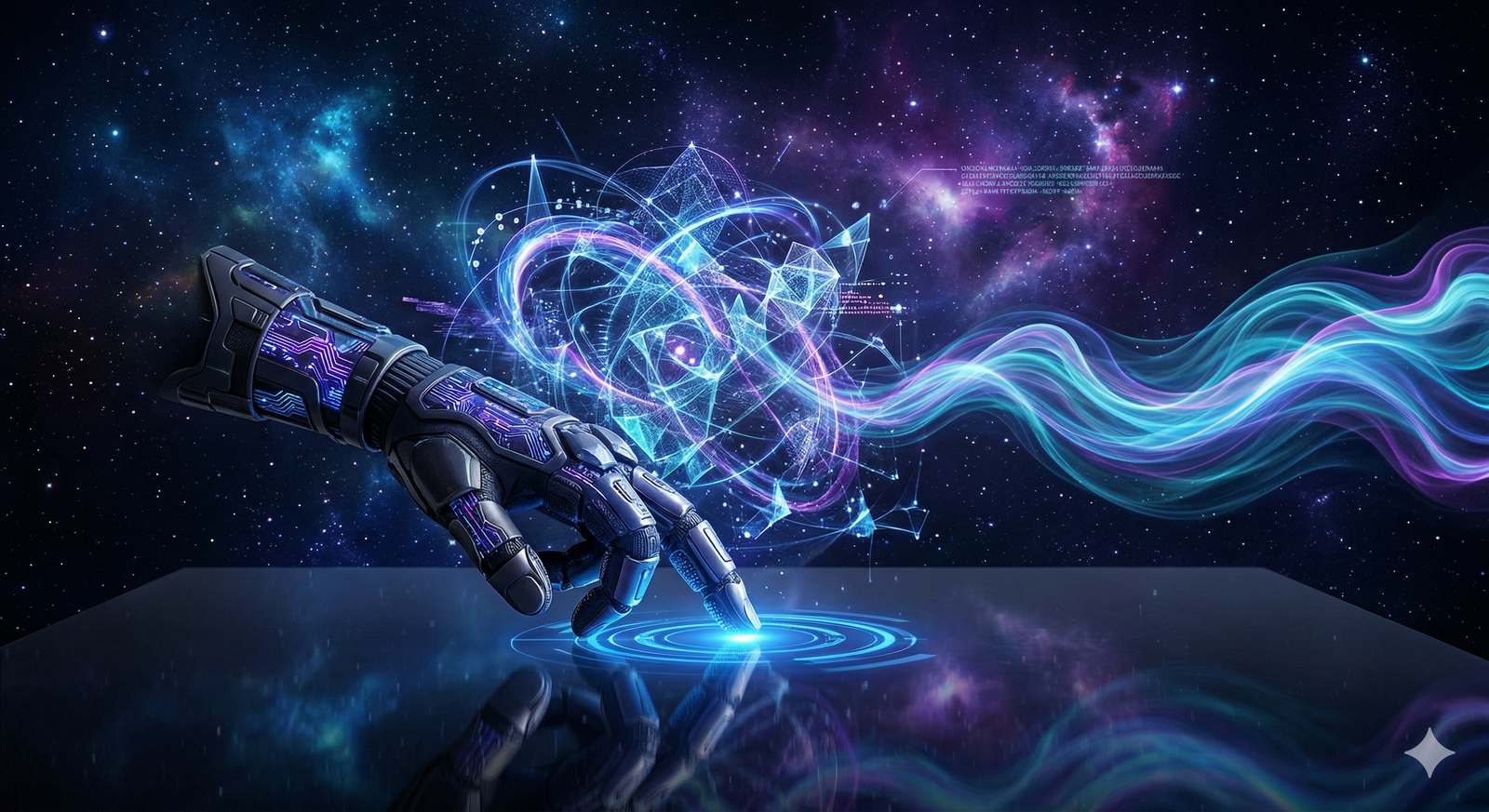
The world of creativity is experiencing an unprecedented transformation, driven by the rapid evolution of Artificial Intelligence. What began as a nascent curiosity in labs has exploded into a mainstream phenomenon, offering tools that can generate art, compose music, write prose, design products, and even craft entire virtual worlds with astonishing speed and sophistication. For some, this technological surge evokes a sense of awe; for others, a flicker of apprehension about the future of human ingenuity. But the trending topic isn't whether AI *can* be creative – it's how we, as human creators, can harness its immense power to amplify our own capabilities, push boundaries, and usher in a new era of innovation.
This isn't a story of machines replacing minds, but rather of intelligence augmenting imagination. Generative AI, specifically, has become the co-pilot many never knew they needed, moving from being a mere calculator of data to a sculptor of ideas. From DALL-E and Midjourney creating breathtaking visuals from text prompts, to ChatGPT crafting compelling narratives and code, these tools are democratizing creation, lowering barriers to entry, and accelerating workflows in ways previously unimaginable. The creative landscape isn't disappearing; it's expanding, offering new terrains for exploration for those willing to adapt and learn.
AI as Your Creative Co-Pilot: Unlocking New Potential
The most significant shift AI brings to creativity is its role as an accelerator and an idea generator. Think of it not as an artist, but as an incredibly versatile assistant capable of infinite iterations.
1. Brainstorming and Ideation on Steroids: Stuck on a concept? AI can instantly generate hundreds of variations for a logo, headline, story premise, or product feature. It can explore diverse stylistic approaches, offer unexpected juxtapositions, and even help you identify overlooked angles. This frees up human cognitive load, allowing you to focus on refining, selecting, and bringing unique emotional depth to the strongest ideas. Imagine a marketing team needing concepts for a new campaign; AI can provide a dozen distinct directions in minutes, complete with potential visuals and taglines, serving as a powerful springboard.
2. Rapid Prototyping and Iteration: For designers, architects, musicians, and filmmakers, the iterative process can be time-consuming. AI significantly shortens this cycle. A graphic designer can generate multiple layout options or color palettes in seconds. An architect can visualize different material applications or structural forms. A musician can experiment with various instrumental arrangements or genre blends. This allows creators to test, refine, and discard ideas at an unprecedented pace, focusing their precious human time on the higher-level strategic and aesthetic decisions that truly define a project.
3. Automating the Mundane, Elevating the Meaningful: Many creative processes involve repetitive or technical tasks that, while necessary, don't require high-level human intuition. AI excels here. Think of image upscaling, background removal, color correction, generating variations of boilerplate text, or even basic video editing. By offloading these tasks to AI, human creators are liberated to concentrate on the conceptualization, narrative, emotional resonance, and strategic impact – the truly 'human' elements that make a creative work compelling and unique.
4. Skill Amplification and Cross-Disciplinary Exploration: AI tools can empower individuals to dabble in creative domains outside their core expertise. A writer can generate mood boards and visual concepts for their stories. A designer can create basic musical scores for their animations. This lowers the barrier for cross-disciplinary experimentation, fostering a more holistic and integrated creative approach, and potentially leading to entirely new forms of expression.
Navigating the New Creative Landscape: Actionable Strategies
Embracing AI isn't about surrendering your creative identity; it's about expanding it. To thrive in this new era, creators must adopt a proactive and adaptive mindset.
1. Master the Art of Prompt Engineering: The quality of AI's output is directly proportional to the quality of your input. Learning to craft precise, detailed, and iterative prompts is a new, essential creative skill. It's less about telling the AI *what* to do, and more about guiding it, articulating your vision with clarity, and understanding how to refine your instructions to achieve desired outcomes. Think of it as learning to communicate with a highly skilled, yet literal, apprentice. Experiment with parameters, styles, negative prompts, and iterative refinement.
2. Focus on 'Human-Centric' Creativity: While AI can generate, it lacks genuine experience, emotion, cultural nuance, and the ability to truly *understand* context or intent beyond its training data. Your unique perspective, lived experiences, emotional intelligence, critical judgment, and ability to tell a compelling story are more valuable than ever. AI can create a technically perfect image, but only a human can imbue it with soul, meaning, and a resonant narrative. Identify what makes your creative voice distinct and lean into those elements.
3. Develop a Hybrid Workflow: The most effective approach isn't AI-only or human-only, but a seamless integration of both. Use AI for initial ideation, rapid prototyping, and automating tedious tasks. Then, bring in your human expertise for refinement, ethical considerations, strategic direction, emotional layering, and the final touch of originality that only you can provide. For instance, an illustrator might use AI to generate initial concepts, then hand-draw over them to add their signature style and detail.
4. Embrace Continuous Learning and Experimentation: The AI landscape is evolving at breakneck speed. New tools and capabilities emerge almost daily. Stay curious, subscribe to industry newsletters, experiment with new platforms, and dedicate time to understanding how these technologies can integrate into your existing creative process. Treat it as a playground for innovation, not a threat to your craft. The creators who will lead are those who are not afraid to learn, unlearn, and relearn.
5. Understand Ethical and Legal Considerations: As with any powerful tool, AI comes with responsibilities. Familiarize yourself with emerging discussions around copyright, intellectual property, data bias, attribution, and the ethical implications of using AI-generated content. Being a responsible creator in the age of AI means not just knowing how to use the tools, but also understanding their societal impact and operating with integrity.
The integration of AI into creative processes is not merely a technological advancement; it's a paradigm shift. It challenges us to redefine what creativity means, to re-evaluate our roles as creators, and to discover new frontiers of artistic and innovative expression. Far from diminishing human creativity, AI has the potential to elevate it, freeing us from the mundane and empowering us to focus on the truly visionary. The future of creativity is a collaborative one, where human imagination, guided by purpose and infused with emotion, works hand-in-hand with artificial intelligence to craft a world more innovative, beautiful, and inspiring than ever before. The creative renaissance is here, and it’s waiting for you to pick up the digital brush.