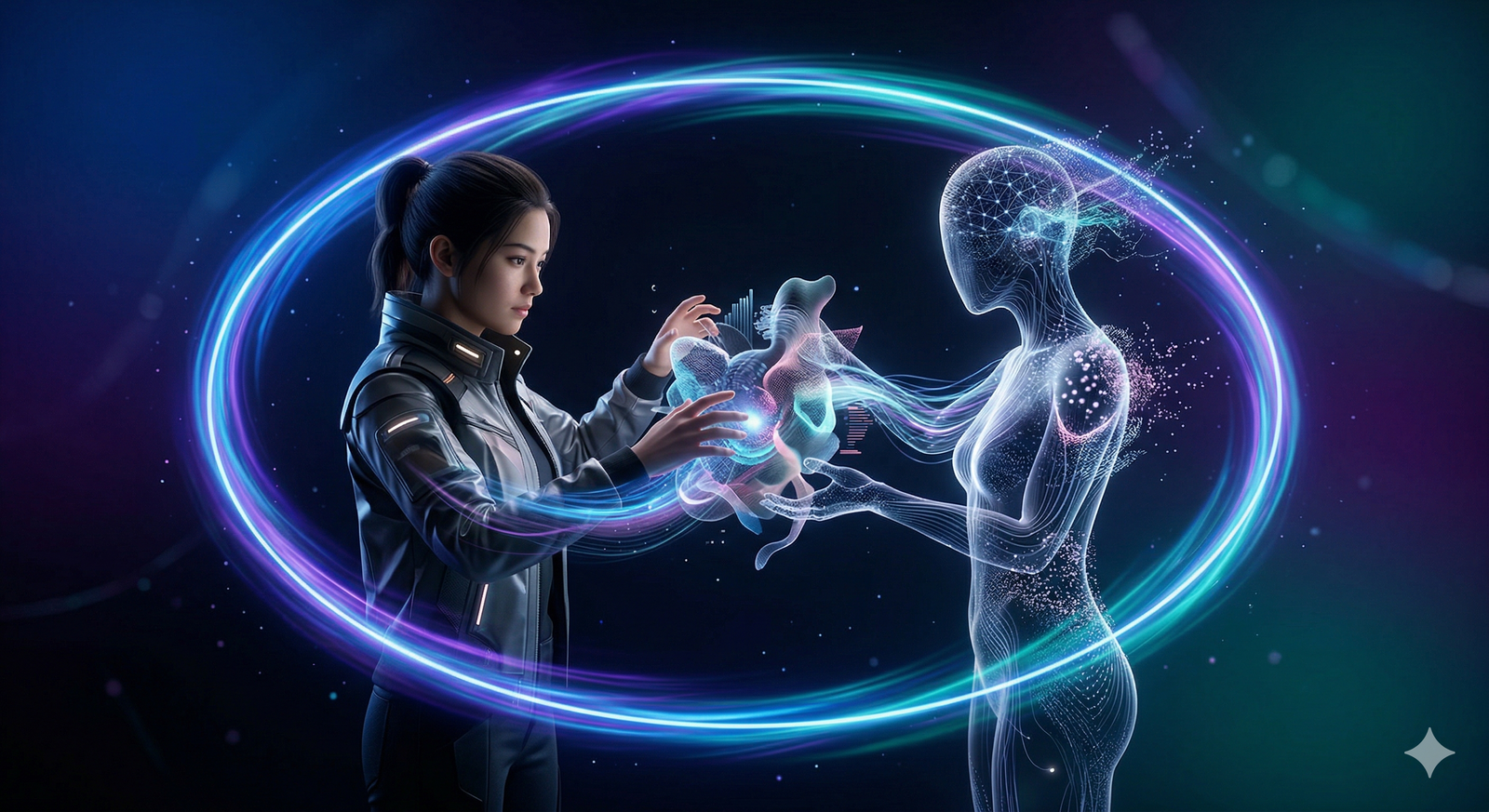
The landscape of creativity is undergoing its most profound transformation in centuries. For too long, the narrative around Generative AI has focused narrowly on "prompt engineering"—the art of coaxing specific outputs from an algorithm. While prompt mastery is undoubtedly valuable, it barely scratches the surface of AI's potential as a true creative collaborator. The real revolution lies in moving beyond mere instruction to fostering a dynamic, iterative partnership where human ingenuity meets artificial intelligence's boundless generative capacity. This isn't about AI replacing human creativity; it's about augmenting, challenging, and elevating it to unprecedented heights.
The Evolution of Creativity: From Solitary Genius to Synergistic AI Partnership
Historically, creative tools have served primarily as extensions of the human hand or mind. From the brush and chisel to the word processor and digital audio workstation, they facilitated the execution of a pre-conceived human vision. Generative AI shatters this paradigm. It doesn't just execute; it ideates, suggests, extrapolates, and even surprises. It functions less like a passive instrument and more like an active, if artificial, sparring partner, capable of generating novel concepts, variations, and perspectives that a solitary human mind might never conceive. This shift demands a new mindset: one that embraces AI not as a mere utility, but as an integral co-creator in the artistic and problem-solving process.
Beyond the Prompt: Strategies for True Human-AI Creative Collaboration
True collaboration with AI transcends the basic input-output loop. It requires strategic thinking, iterative engagement, and a deep understanding of how to leverage AI's strengths to complement human intuition and expertise.
Strategic Prompt Crafting: The Art of Intentional Input
While "prompt engineering" is often seen as a technical skill, in a collaborative context, it becomes an art form centered on intent and direction. It’s about setting the stage for a dialogue, not just issuing a command.
* Role-Playing Prompts: Assign the AI a specific persona or expertise. Instead of "Write a poem about nature," try, "Act as a seasoned Romantic poet with a penchant for metaphor. Write a poem about the resilience of a single oak tree through changing seasons, focusing on themes of time and endurance." This guides the AI's stylistic and thematic approach, leading to more nuanced outputs.
* Constraint-Based Prompts: Introduce deliberate limitations to force novel solutions. "Generate three distinct architectural concepts for a sustainable urban dwelling, but each must incorporate a waterfall feature and be built entirely from recycled shipping containers." Constraints often spark greater creativity by narrowing the solution space while expanding the imaginative possibilities within it.
* Iterative Refinement through Dialogue: Don't expect perfection in the first output. Treat the AI's response as a draft. "That's a good start. Now, make the tone more melancholic and introduce an element of magical realism," or "Expand on the second paragraph, focusing more on the internal conflict of the protagonist." This back-and-forth refines the vision.
The AI as a Brainstorming Catalyst: Unlocking Novel Ideas
One of AI's most powerful collaborative functions is its ability to generate a vast array of ideas, often challenging human assumptions and opening new avenues of thought.
* Divergent Thinking Partner: Use AI to rapidly generate multiple, distinct ideas around a core concept. Ask for "20 radically different plot twists for a murder mystery where the detective is also the primary suspect," or "15 unique marketing slogans for a sustainable fashion brand targeting Gen Z." The sheer volume and variety can spark connections you wouldn't have made alone.
* Perspective Shifter: Ask the AI to reframe a problem or idea from an unusual viewpoint. "Describe the concept of 'digital privacy' from the perspective of an ancient philosopher," or "How would a sentient toaster describe the human breakfast ritual?" This can break creative blocks and reveal overlooked dimensions.
* Concept Blending and Juxtaposition: Instruct the AI to combine seemingly disparate concepts. "Generate a short story blending elements of cyberpunk and classical ballet," or "Design a furniture piece that merges minimalist Scandinavian aesthetics with ornate Baroque detailing." These unexpected fusions often lead to groundbreaking concepts.
Iterative Refinement and Feedback Loops: Co-Sculpting the Vision
Collaboration is a two-way street. Your ability to provide clear, constructive feedback to the AI is crucial for shaping its outputs into your desired vision.
* Specific and Actionable Feedback: Instead of "Make it better," say, "Increase the emotional tension in the dialogue between character A and B by adding more subtext and unspoken conflict," or "Adjust the color palette to be warmer and more inviting, using analogous colors."
* A/B Testing with AI: Ask the AI to generate multiple versions of an output based on slightly different parameters, then compare and select the most effective. "Give me three versions of this headline: one emphasizing urgency, one focusing on benefit, and one using a rhetorical question."
* Reverse Engineering: Sometimes, an AI output will be close but not quite right. Ask the AI to explain its reasoning or the underlying structure of its output. "Explain the thematic elements you incorporated into this poem," or "Deconstruct the narrative arc of the short story you just generated." This helps you understand its "thought process" and guide it more effectively.
Overcoming Creative Blocks: AI as a Muse and Motivator
Every creator faces moments of stagnation. AI can be a powerful ally in breaking through these barriers.
* Idea Generation when Stuck: When you have no idea where to start, give the AI a vague concept and ask it to generate initial sparks. "Give me 10 opening lines for a fantasy novel set in a world where magic is dying," or "Suggest five different artistic mediums to express the feeling of 'nostalgia'."
* Challenging Assumptions: Ask the AI to critique or question your existing ideas. "What are the weaknesses in this business plan?" or "Suggest alternative endings to this story that completely subvert reader expectations." This can force you to re-evaluate and strengthen your work.
* Expanding on a Fragment: If you have a single line, an image, or a chord progression, feed it to the AI and ask it to expand upon it, suggesting continuations, variations, or thematic developments.
Navigating the Ethical and Ownership Landscape
As we embrace AI as a creative partner, it's vital to acknowledge the evolving ethical and legal considerations. Questions of originality, copyright, and the definition of authorship are complex. However, the human role remains paramount. The AI generates, but the human curates, refines, directs, and ultimately imbues the work with intent, meaning, and a unique artistic fingerprint. The final creative act, the decision to publish or present, and the responsibility for the work's impact, firmly rest with the human collaborator. Our unique contribution lies in our critical judgment, emotional intelligence, and the ability to weave disparate elements into a coherent, compelling narrative or artwork.
The Future of Creative Work: A Call to Collaborate
The era of the solitary creative genius, while romanticized, is giving way to a more collaborative, technologically augmented future. Generative AI is not a threat to human creativity but an unprecedented opportunity to expand its horizons. For artists, writers, designers, musicians, and innovators across all fields, the call is clear: embrace this new partnership. Learn to speak its language, understand its capabilities, and, most importantly, bring your unique human perspective, empathy, and vision to the collaborative table.
The future of creativity isn't about humans *or* AI; it's about humans *with* AI, forging new frontiers of imagination and expression. Start experimenting, iterating, and collaborating today, and unlock a creative potential you never knew existed.